The Project
About
The research project “The Performative Realm of ‘Colonia Dignidad,’ a German Enclave in Chile, in Historical and Political Contexts” (Performatywna strefa „Kolonii Godność”, niemieckiej enklawy w Chile, w kontekście historycznym i politycznym) is financed by the grant no. 2021/43/B/HS2/00360 from the National Science Centre (Narodowe Centrum Nauki, NCN) under its OPUS 22 Programme. Amount of funding: 325,511 PLN from 7 July 2022 to 6 July 2025 (the project has been extended by two years without additional funding).
Keywords
Augusto Pinochet, Chile, civil-military dictatorship, Colonia Dignidad, dance, human rights violations, Latin America, music, Paul Schäfer, performance, protest actions, return to democracy, sexual child abuse offences, theatre
The objective
The project aims to explore and interpret the performative realm of Colonia Dignidad (Dignity Colony), a totalitarian religious community and the organised criminal group that ran it, founded by German expatriates in Chile in 1961, where a variety of human rights violations were perpetrated with impunity over decades. The project intends to elaborate the interim hypothesis that the effective cultivation of the colony’s (mythologised) self-image, which cast it as a hard-working and pious community focused on charity, enabled its longevity and staying power.
The research description
Preliminary research indicates that the Colonia performative realm is a vast territory which comprises: (1) diverse rituals and celebrations as well as acrobatic and gymnastic demonstrations and musical and theatre performances, the latter often used as part of the colony’s complex PR activities and propaganda efforts; (2) performances by the enclave leader, Paul Schäfer, himself a master manipulator, charismatic preacher and animator; (3) the Colonia-as-performance (skillful reenactment of a Bavarian village at the foot of the Andes rather than the Alps); and (4) a plethora of protest actions, such as numerous demonstrations directed against Schäfer and his acolytes, as well as those staged or orchestrated by him and his allies. These operations are scrutinized, taking into account their historical and political contexts, and focusing on their consequences and aftermaths. The project’s inquiries build upon a variety of sources, including textual, audial, visual and audiovisual, as well as on disparate discourses: academic, journalistic and personal. In the project’s framework, the research hypothesis is confronted with archival sources, existing findings provided by Chilean and German scholars, and perspectives of selected ex-colonists, representatives of human rights organizations, and film documentarians who have dealt with the subject in their works.
Rationale
Colonia Dignidad is a veritable black hole that crushed together a variety of problematic issues, such as legal and moral responsibility, commemoration, financial and moral restitution, as well as methods of dealing with psychological trauma. They mostly remain unresolved in the Chilean and German societies in which the processes of a broader and deeper critical reevaluation of the enclave have accelerated only recently. The project seeks to transpose a multidimensional and interdisciplinary academic debate on the Colonia beyond Chilean and German contexts, where it unfolds at present. The topic is salient as the practices of Colonia Dignidad mirror and amplify many major upheavals that have shaken the world over the past seven decades, including post-war traumas, divisions and conflicts of the Cold War, religious fanaticism, and rampant child sexual abuse.
The most important results
Interrogation of the Colonia performative realm seeks to contribute to a fuller picture thereof and a more exhaustive understanding of many related problems – moral, legal, and psychological – which result from Colonia’s operations. Additionally, the interdisciplinary investigations carried out in the project framework will enrich the growing body of research in such fields as performance studies and cultural studies, and ultimately help refine their methodologies. Sharing the project’s outcomes in English-language academic publications may also finally begin to undo the dearth of academic material on the subject in English and do justice to the subject’s grave importance for better understanding of late modernity.
Publications
Performing (In)Dignity
Ziółkowski, Grzegorz. Performing (In)Dignity: The Performative Realm of Colonia Dignidad, a German Enclave in Chile (book, to be published in English by Routledge)
Abstract: The book maps, explores and interprets the performative realm of what has come to be known as Colonia Dignidad (Dignity Colony), a pseudo-religious community that originated in the Federal Republic of Germany in the mid-1950s and operated in Chile from 1961. For decades, its sealed-off compound was the scene of a variety of crimes and human rights violations perpetrated systematically and with impunity. The volume seeks to answer the question of how far the successful cultivation of an image of a hard-working and orderly community focusing on charity work contributed to the congregation’s staying power. It also reflects on the role of the performative actions of the colony’s opponents in shattering this façade.
The publication frames the subject conceptually and outlines the history of the group, placing it in multiple contexts. At its core, the book provides analyses and interpretations of diverse celebrations, gymnastic displays, music concerts and theatrical performances which were used as an element of the group’s diverse PR activities. In addition, the publication investigates the multiple impersonations performed by the community’s manipulative leader, Paul Schäfer (1921–2010), and examines the enclave’s adaptive skills, which allowed it to effectively choreograph its image under changing political circumstances and ultimately create a touristic Bavarian village at the foot of the Andes rather than the Alps. Furthermore, the book includes studies of numerous protest actions staged against the group, as well as those orchestrated by Schäfer and his confidantes to secure the continued existence of their criminal structure. All of the investigations are conducted against a complex backdrop which intertwines cultural, economic, historical, political, religious, and social aspects. The publication also includes a comprehensive timeline of the Colony of Dignity and a list of key sources on the subject.
Of interest to scholars and students in fields ranging from performance to history, human rights, memory studies, politics, religion, and trauma studies, Performing (In)Dignity: The Performative Realm of ‘Colonia Dignidad’, a German Enclave in Chile offers a unique perspective on an important episode of contemporary history that belongs to the complex web of relations between the ‘Global North’ and ‘Global South’.
Colonia Dignidad: protesty, uroczystości, występy
Ziółkowski, Grzegorz. Colonia Dignidad: protesty, uroczystości, występy. Od „Marszu na rzecz praw człowieka” (1990) do ceremonii upamiętniającej Detenidos Desaparecidos (2006) (book, to be published in Polish in OA)
Streszczenie: Książka ta poświęcona została publicznej części performatywnej strefy „Kolonii ‘Godność’” (Colonia Dignidad) – niemieckiej totalitarnej społeczności wyznaniowej i kierującej nią zorganizowanej grupy przestępczej, działającej w Chile od 1961 roku – w kilkunastoletnim okresie nazywanym ‘transformacją demokratyczną’, jaki nastąpił po zakończeniu dyktatury cywilno-wojskowej (1973–1990). Publikacja przedstawia opis oraz pogłębioną analizę i interpretację tego obszaru, biorąc pod uwagę czas i miejsce widowisk, ich wykonawców i odbiorców, funkcje i gatunki, elementy składowe i repertuar, estetykę, a także ich konsekwencje. Umieszczając badania w kontekstach historycznym, kulturowym, politycznym, religijnym i społecznym, książka ta stawia sobie za cel udzielenie odpowiedzi na pytanie dotyczące roli publicznych działań performatywnych „Kolonii”, stanowiących element jej rozbudowanych poczynań propagandowych, w umożliwieniu dalszego trwania tej totalitarnej grupy w stopniowo zmieniającej się rzeczywistości politycznej.
Abstract: This book is devoted to the public aspect of the performative realm of ‘Colonia Dignidad’ (Dignity Colony) – a German totalitarian religious community and the organised criminal group that ran it, operating in Chile from 1961 – during the period of over a decade known as the ‘democratic transition’, which followed the end of the civil-military dictatorship (1973–1990). This publication presents descriptions, in-depth analyses and interpretations of this field, taking into account the time and place of the performances, their performers and audiences, functions and genres, constituent elements and repertoire, aesthetics, as well as their consequences. By situating the research within historical, cultural, political, religious and social contexts, this book aims to answer the question regarding the role of the Colony’s public performances – which formed part of its extensive propaganda efforts – in enabling the continued existence of this totalitarian group within a gradually changing political reality.
Colonia Dignidad: actuaciones, celebraciones, protestas
Ziółkowski, Grzegorz. «Colonia Dignidad: actuaciones, celebraciones, protestas. Desde la Caminata por los Derechos Humanos (1990) hasta la ceremonia en memoria de los Detenidos Desaparecidos (2006)» (book, to be published in Spanish)
Resumen: Este libro está dedicado a la parte pública de la zona performativa de Colonia Dignidad, una comunidad religiosa totalitaria alemana y un grupo delictivo organizado que la dirige, que operó en Chile desde 1961. El libro se centra en el periodo de más de una década denominado «transformación democrática», que tuvo lugar tras el fin de la dictadura cívico-militar (1973-1990). La publicación ofrece una descripción, así como un análisis e interpretación en profundidad de este ámbito, teniendo en cuenta la época y el lugar de los espectáculos, sus intérpretes y público, sus funciones y géneros, sus componentes y repertorio, su estética, así como sus consecuencias. Al situar la investigación en los contextos histórico, cultural, político, religioso y social, este libro se propone responder a la pregunta sobre el papel que desempeñaron las actuaciones públicas de Colonia, como parte de su amplia campaña propagandística, a la hora de permitir la supervivencia de este grupo totalitario en una realidad política en constante cambio.
Colonia Dignidad: Timeline
Ziółkowski, Grzegorz. Colonia Dignidad: Timeline (book, to be published in English in OA)
The Staged Drowning of Santa Claus
Ziółkowski, Grzegorz. “The Staged Drowning of Santa Claus as a Foreshadowing of the Horror in Colonia Dignidad, a German Enclave in Chile” (article in preparation)
Solidarity-in-action
Ziółkowski, Grzegorz. “Solidarity-in-action: Chilean protest performance of funa beyond borders” (article in preparation)
Documentary Filmmakers Confront Trauma
Ziółkowski, Grzegorz. “Documentary Filmmakers Confront Trauma: An Interview with Marianne Hougen-Moraga and Estephan Wagner.” Journal of Scandinavian Cinema, vol. 11, no. 3, 2021, pp. 267–282. https://intellectdiscover.com/content/journals/10.1386/jsca_00052_7; https://doi.org/10.1386/jsca_00052_7. (Pre-project publication)
Research data
EN: Please note that all the files listed below will be revised and updated in the first half of 2027.
ES: Ten en cuenta que todos los archivos que se enumeran a continuación se revisarán y actualizarán durante el primer semestre de 2027.
In English
Colonia Dignidad: Annotated catalogue of archival audiovisual recordings from the Colonia Dignidad Progress Film collection
Colonia Dignidad: Timeline
En español
Colonia Dignidad: Catálogo comentado de las grabaciones audiovisuales de archivo de la colección Colonia Dignidad Progress Film
Relevant information is also available on the website of the project “Colonia Dignidad. Un archivo de historia oral chileno-alemán” / “Colonia Dignidad. Ein chilenisch-deutsches Oral History-Archiv” (CDOH) conducted at the Freie Universität Berlin (Free University of Berlin, FUB). In Spanish, in German.
Research visits
Chile, 2 January – 11 February 2024
- Field research at the following memorial sites in: Santiago de Chile (Casa Memoria José Domingo Cañas, Cementerio General, Cementerio Católico de Maipú, Corporación Parque por la Paz Villa Grimaldi, Edificio Diego Portales, Londres 38 Espacio de Memorias); Talca (Lugar de Memoria Adriana Bórquez Adriazola); Valparaíso (Cementerio no. 3, Monumento a los Detenidos Desaparecidos y Ejecutados Políticos por la Dictadura Militar).
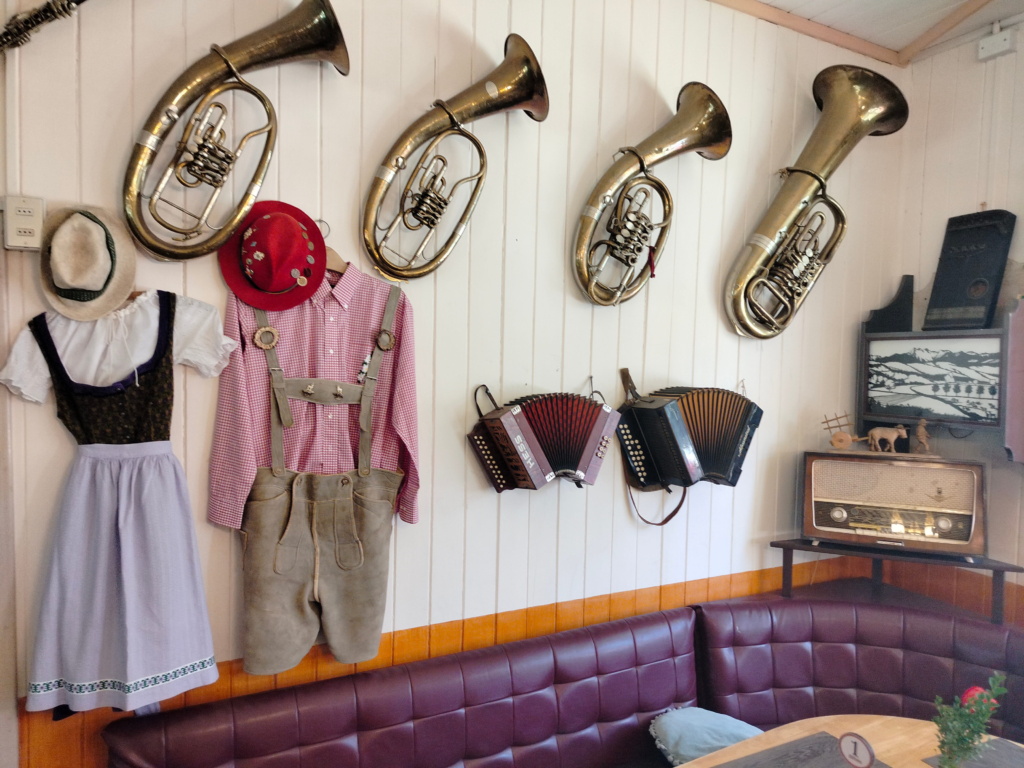
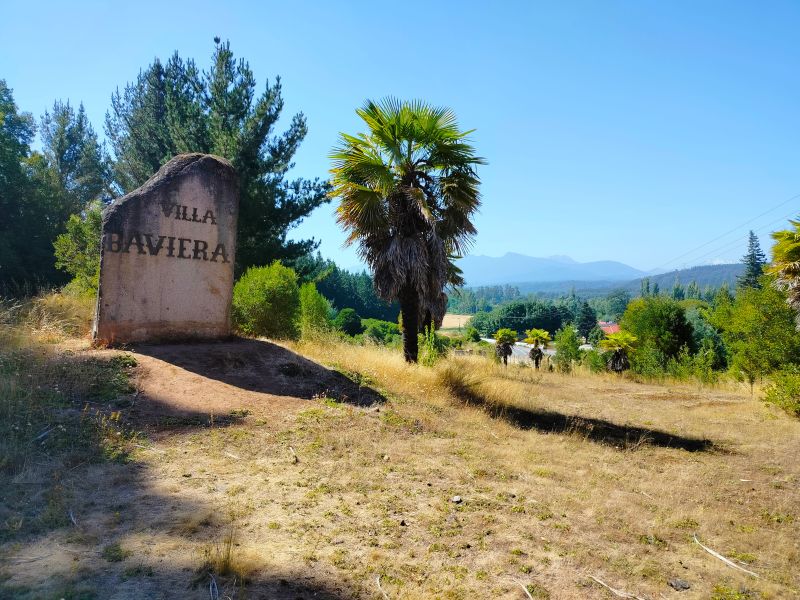
- Field research in the following places directly related to the history of Colonia Dignidad: Casino Familiar, restaurant of the former Colonia Dignidad (near Bulnes); house at 817 Campos de Deportes Avenue (Santiago de Chile); house at 512 Román Díaz Street (Santiago de Chile); house at 262 Ignacio Carrera Pinto Street (Parral); Parque de Recuerdo Cordillera (Santiago de Chile); Colonia Dignidad (so-called ‘Villa Baviera’) and its surroundings (Commune of Parral).
- Consultations with the following human rights activists and experts: Paulina Acevedo Arenas (Casa Memoria José Domingo Cañas, Santiago de Chile), María Luisa Ortiz Rojas (Museo de la Memoria y los Derechos Humanos, MMDH, Santiago de Chile), José Manuel Rodríguez Leal (MMDH, Santiago de Chile), Jorge Soto Gutiérrez (Agrupación de Familiares de Detenidos Desaparecidos-Maule, Talca), Myrna Troncoso Muñoz (AFDD-Maule, Talca)
- Consultations with the following academics: Dr. Giulio Ferretto Salinas (Universidad de Playa Ancha, Valparaíso), Prof. Elizabeth Lira (Universidad Alberto Hurtado, Santiago de Chile).
- Consultations with the following human rights lawyers: Karen Cea Pérez (Asociación por la Memoria y los Derechos Humanos Colonia Dignidad, AMCD, Santiago de Chile), Mane Garces (AMCD, Santiago de Chile), Hernán Fernández Rojas (Santiago de Chile), Winfred Hempel Malessa (Santiago de Chile).
- Archival research at: Archivo Nacional de la Administración (ARNAD, Santiago de Chile), Biblioteca Eduardo Budge y Fondo Histórico Patrimonial Pontifica Universidad Católica de Valparaíso (PUCV, Valparaíso), Museo de la Memoria y los Derechos Humanos (MMDH, Santiago de Chile).
- Conversations with the following former settlers (known as colonas and colonos) of Colonia Dignidad: Rafael Alexis Labrín, Astrid Tymm de Lindemann, Harald Lindemann, Sergio Campos, Iris Leiva Arévalo de Campos, Dietlinde Gert, Jürgen Szurgelies.
- Conversations with the following artists who created works inspired by the history of Colonia Dignidad: Edison Cájas (theatre and TV theatre, Santiago de Chile), Daniela Contreras López (theatre and TV theatre, Santiago de Chilec. Orlando Lübbert (film, Santiago de Chile), Mariana Najmanovich Sirota (visual arts, Santiago de Chile).
- Conversations with the following other artists: Claudio Santana Bórquez (Performer Persona Project, Valparaíso), Jesús Urqueta Cazaudehore (Teatro Ictus, Santiago de Chile).
Berlin, Germany, 12 June 2024
The research visit included consultations with Dr. Evelyn Hevia Jordán (Freie Universität Berlin).
Berlin, Germany, 16–18 November 2024
The research visit included consultations with Dr. Evelyn Hevia Jordán (Freie Universität Berlin) and Dr. Jan Stehle (Forschungs- und Dokumentationszentrum Chile-Lateinamerika, Berlin).
Chile, 18 November – 15 December 2024
- Field research at the following memorial sites in: La Serena (Memorial de los Detenidos Desaparecidos y Ejecutados Políticos); Parral (Cementerio Parroquial San José); Santiago de Chile (Cementerio General, Corporación Parque por la Paz Villa Grimaldi, Cuartel Borgoño de la Central Nacional de Informaciones, Estadio Nacional Memoria Nacional, Ex Centro de Detención Clínica Santa Lucía, Museo de la Solidaridad Salvador Allende).
- Field research in the following places directly related to the history of Colonia Dignidad: Colonia Dignidad (so-called ‘Villa Baviera’) and its surroundings (Commune of Parral).
- Consultations with the following human rights activists and lawyers: María Castillo (Santiago de Chile), Luis Alexis Urra Candia (Asociación por los Derechos Humanos, Parral), Hernán Fernández Rojas (Santiago de Chile).
- Archival research at: Archivo Nacional de la Administración (ARNAD, Santiago de Chile), Museo de la Memoria y los Derechos Humanos (MMDH, Santiago de Chile).
- Conversations with the following artists who created works inspired by the history of Colonia Dignidad: Edison Cájas (theatre and TV theatre, Santiago de Chile), Daniela Contreras López (theatre and TV theatre, Santiago de Chile), Gabriela Salazar (theatre, Santiago de Chile).
- Conversations with other artists: Benjamín Rivas (Teatro en Casa, Santiago de Chile).
Hamburg, Germany, 10–14 February 2025
The research visit included archival research at the archive of the Hamburg Institute for Social Research (Hamburger Institut für Sozialforschung).
Cologne, Germany, 9–13 June 2025
The research visit included a visit to the National Socialism Documentation Centre (EL-DE Haus) in Cologne and a field trip to Heide, Hennef-Heisterschloss, Siegburg, and Troisdorf.
Warsaw, Poland, 19 November 2025
The research visit included consultations with Margarita Romero Méndez and Miguel Ángel Rebolledo (Asociación por la Memoria y los Derechos Humanos Colonia Dignidad, AMCD, Santiago de Chile)
Oświęcim (Ger. Auschwitz), Poland, 26–28 November 2025
The research visit included visit to the Auschwitz-Birkenau Memorial and Museum.
Krefeld, Germany, 29 August 2026
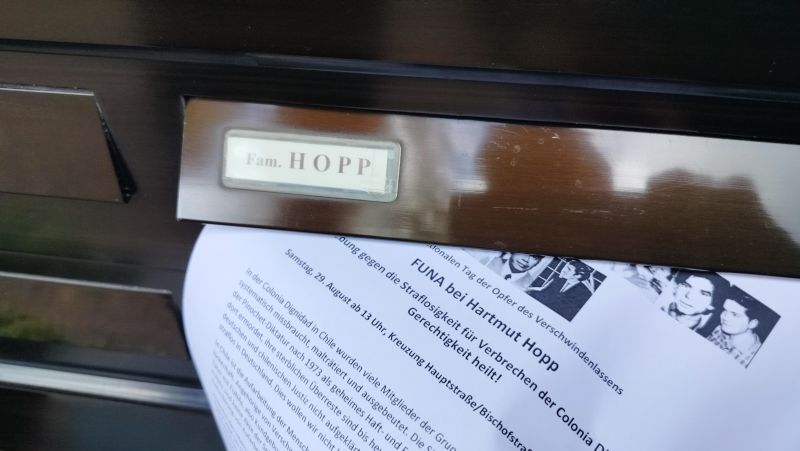
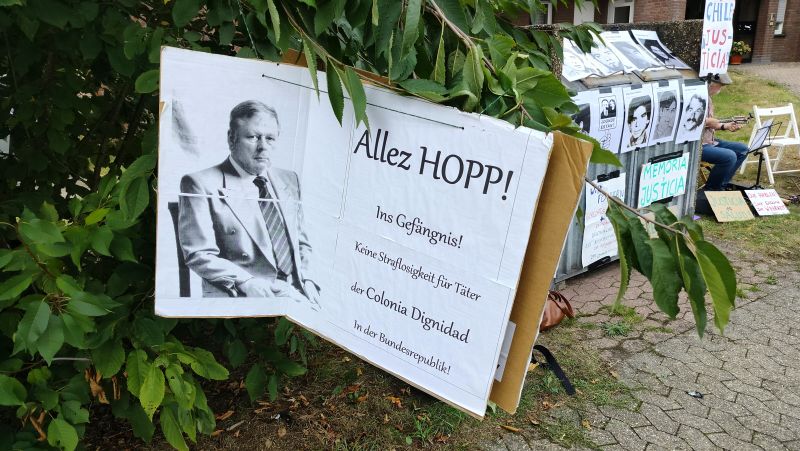
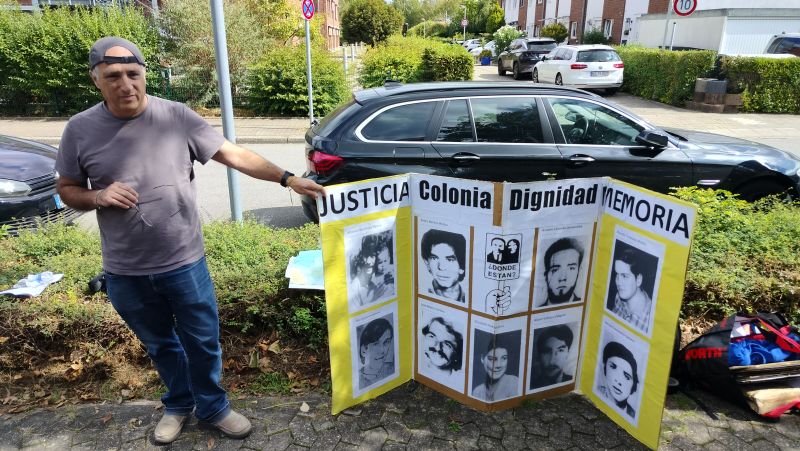
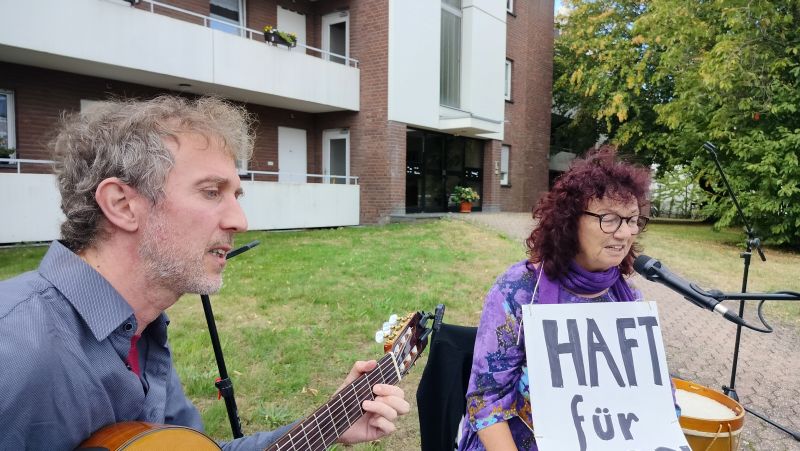
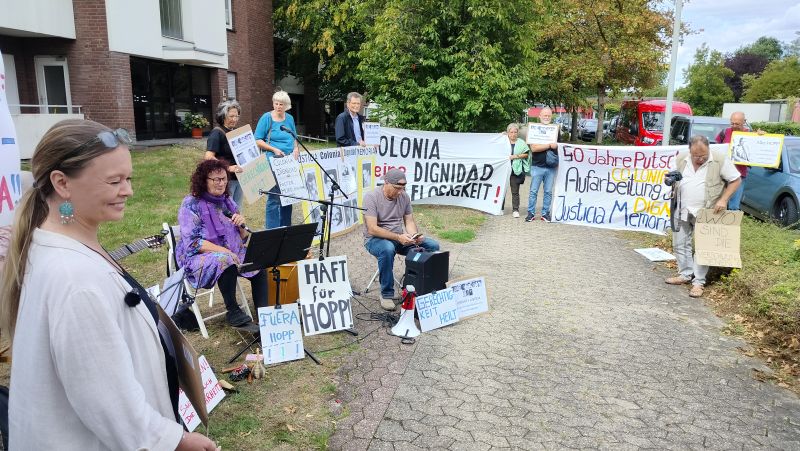
The research visit included carrying out participatory observation of funa (an action of collective public shaming) against Hartmut Hopp (former director of the Colonia Dignidad hospital, who was sentenced to five years and one day in prison, a judgement that has become final in Chile in 2013). It also included a visit of the location of Free People’s Mission (Freie Volksmission).
Speeches
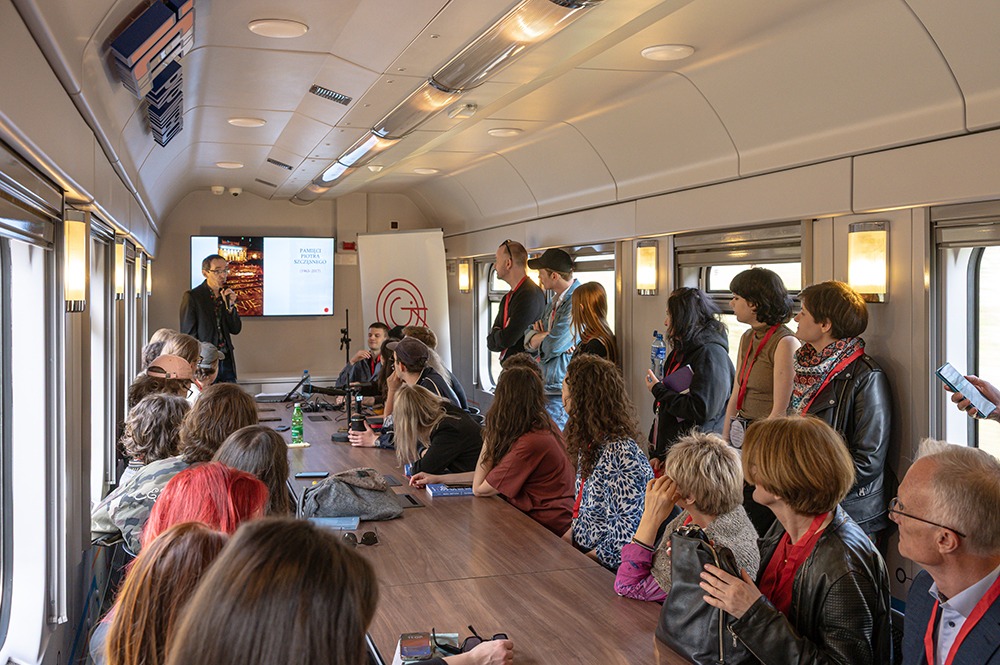
The Liberation Train Warsaw–Gdańsk 2025
Guest lecture: “Solidarity in Action: The Aftermath of Self-Immolation as Exemplified by the Protest of Sebastián Acevedo (Chile, 1983)”
Guest lecture was delivered in a special conference carriage of the Liberation (Wyzwolenie) Festival Train travelling from Warsaw to Gdańsk as as part of the Lamentations (Lamentacje) Theatre Festival organised by the Polish Theatre in Warsaw and the Grotowski Institute in Wrocław, 15 April 2025.
Abstract: On 11 November 1983, Chilean worker Sebastián Acevedo Becerra set himself on fire in Concepción, demanding the release of his daughter and son, who had been abducted more than two days earlier by the CNI, Augusto Pinochet’s notorious intelligence service. Although Acevedo was acting on behalf of his children, his desperate act became a symbol of the suffering of all those whose loved ones disappeared without trace during the Chilean civil-military dictatorship (1973–90). Shortly after this dramatic event, a group of activists added his name to the name of the pacifist Movement Against Torture (Movimiento Contra la Tortura), which they had founded in August 1983. The self-immolation also inspired the creation of the Women’s Movement for Life (Movimiento Mujeres por la Vida). By the end of the dictatorship, both organisations carried out dozens of peaceful and pro-democracy protests, expressing their opposition to the military junta’s brutality and solidarity with the detained disappeared (detenidos-desaparecidos), their families and friends. The lecture reflects on the aftermath of self-immolation as the most radical form of protest and asks questions about the effectiveness of such actions.
iECD Berlin 2025
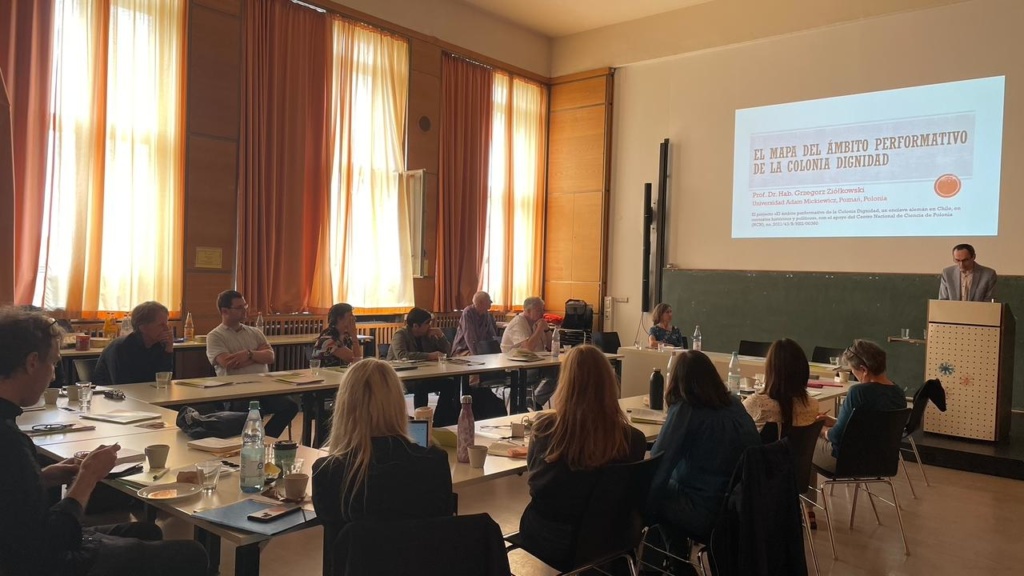
Paper: “El mapa del ámbito performativo de la Colonia Dignidad” (The Map of the Performative Realm of Colonia Dignidad)
Workshop: Colonia Dignidad abordaje histórico y cultural: testimonios y otras fuentes para la creación de medios digitales y exposiciones (Colonia Dignidad – historical and cultural reappraisal: testimonies and other sources for the development of digital media and exhibitions; Colonia Dignidad – historische und kulturelle Aufarbeitung: Zeugnisse und andere Quellen für die Entwicklung von digitalen Medien und Ausstellungen), the Lateinamerika Institut, Freie Universität Berlin (Institute for Latin American Studies, Free University of Berlin, FUB), Germany, 27 June 2025.
The event aimed to discuss the historical and cultural approach to the Colony of Dignity in the context of the project “Interactive memories of Colonia Dignidad. A Chilean-German cooperation for historical and cultural reappraisal (iECD)” (Interaktive Erinnerungen an die Colonia Dignidad. Eine chilenisch-deutsche Kooperation zur historischen und kulturellen Aufarbeitung (iECD)) and create a space for an academic exchange between experts in this area.
At the invitation of Prof. Stefan Rinke, director of the Lateinamerika Institut (FUB), and Dr. Evelyn Hevia Jordán (FUB).
Resumen: La ponencia comenzará con una breve introducción al concepto multidimensional de «performance», que originó en los estudios teatrales anglosajones y se ha consolidado en muchos idiomas, entre ellos el alemán y el español. A continuación, se ofrecerá una visión general del ámbito performativo de Colonia Dignidad, ilustrada con material iconográfico y breves grabaciones audiovisuales. Esta parte central se dividirá en dos secciones principales: en la primera, se identificarán y comentarán brevemente siete tipos diferentes de performances de la Colonia y, a continuación, se superpondrá un calendario a estas diferentes áreas. La periodización se corresponde a los cinco periodos identificados por Jan Stehle en su publicación seminal Der Fall Colonia Dignidad (2021), recientemente traducida al castellano (2025). Por último, se intentará responder a la pregunta clave planteada por Evelyn Hevia Jordán en 2023: «¿Cómo todo esto fue posible?». Es una pregunta que debería hacerse cualquiera que se haya abordado seriamente el tema de la Colonia Dignidad. En resumen, se llegará a la siguiente conclusión: la Colonia Dignidad fue (y la llamada «Villa Baviera» sigue siendo) un ejemplo exitoso de fraude y mistificación performativa.
IFTR Cologne 2025
Paper: “Carnival elements as licensed transgression in Colonia Dignidad, a sinister German enclave in Chile”
Conference: Performing Carnival: Ekstasis, Subversion, Metamorphosis, The International Federation for Theatre Research (IFTR), Cologne (Köln), Germany, 9–13 June 2025. Website.
Abstract: Performative practices were an integral part of the complex activities of Colonia Dignidad, a pseudo-religious community that originated in North Rhine-Westphalia and operated in Chile from the early 1960s. For decades, it systematically committed numerous crimes and violated human rights. Through various public performances, including acrobatic displays and music concerts, the colony’s manipulative leader, Paul Schäfer, and his inner circle successfully cultivated the image of an orderly group focused on charity work, undoubtedly one of the key factors which enabled the group’s longevity and staying power. However, the community’s performative activities were directed not only outwards but also inwards. The latter in some cases resorted to the carnival tradition with its poetics of abundance, surprise and transgression, as well as astonishing metamorphoses, elaborate disguises and an upside-down world. This may seem paradoxical in a place where rank-and-file settlers suffered pervasive oppression, were subjected to constant surveillance, and were brought into line with beatings, electroshocks and psychotropic drugs. The paper will argue that transgressive elements in the colony’s inner performances were in fact licensed by those in power, and by allowing them to occur, group and individual energies were controlled in yet another way. This argument will be illustrated by two examples set in a historical context: an early performance of a demonstrative drowning of Santa Claus in the Perquilauquén river (1962?); and a performance (previously unmentioned in the literature on the subject) staged by young female colonists impersonating the area’s indigenous inhabitants, the Mapuche, shortly after Schäfer’s escape to Argentina (1997?).
TaPRA Warwick 2025
Paper: “Solidarity-in-action: Chilean protest performance of funa beyond borders”
Conference: Milestones and Markers, Theatre and Performance Research Association (TaPRA), Warwick, UK, 27–29 August 2025.
Abstract: In the face of many contemporary challenges, ranging from the destabilization of moral values in politics, through deregulated technological development, to ecological threats, it seems appropriate to bring to the fore the idea of solidarity, which can manifest itself in many different forms, including performative ones. Before this idea became the driving force behind the trade union movement in Poland in the early 1980s, it was embodied in Chile in response to state violence during Pinochet’s civil-military dictatorship (1973–90). After the transition to democracy, progressive Chileans developed a grassroots performative practice called funa to counter the lack of justice in the process of reckoning with the murderous regime. Funa is an action of the collective public shaming of the perpetrators of politicized violence in those criminal cases where the justice system has failed. The verb ‘funar’ means to ‘disclose’ or ‘expose’ in Chileno (Chilean-Spanish) and originates from Mapudungún (the language of the Indigenous Mapuche), where it designates something that rots. The paper analyses those funas which went beyond the borders of Latin America and were carried out in Germany between 2006 and 2023 as a call for justice and a celebration of solidarity. These actions embraced not only the traditional paraphernalia of protest performances, but also many cultural forms, including the traditional Chilean cueca (pair dance), danced alone to condemn the Pinochet dictatorship’s enforced disappearance strategy. All actions being analysed were aimed against the impunity of the two fugitive top echelons of Colonia Dignidad (Dignity Colony), a pseudo-religious German criminal community which operated in Chile from the early 1960s and played an important role in the regime’s apparatus of repression. The example of those Chileans and Germans who joined forces in these subversive and transgressive acts reaffirms that confronting serious challenges requires teamwork, mutual support and the cultivation of solidarity; it requires solidarity-in-action.
Music, Violence, Memory in Auschwitz-Birkenau 2025
A contribution to the discussion at the conference organised by the Research Institute for Musical Theatre, University of Bayreuth (Forschungsinstitut für Musiktheater, Universität Bayreuth) in collaboration with Adam Mickiewicz University in Poznań (Uniwersytet im. Adama Mickiewicza w Poznaniu) at the Auschwitz-Birkenau Memorial and Museum, Oświęcim (Germ. Auschwitz), 26–28 November 2025.
Open meeting
Art as a participant in Memories: Creative experience of Núcleo Creativo CC in Chile, Poznań, Poland, 2025
An open meeting with Daniela Contreras-López and Edison Cájas (Núcleo Creativo CC, Chile), led by Prof. Grzegorz Ziółkowski, 14 November 2025, 9:45–11:15 am at the Theatre Studio in Collegium Maius of Adam Mickiewicz University in Poznań (Uniwersytet im. Adama Mickiewicza w Poznaniu).
Photos


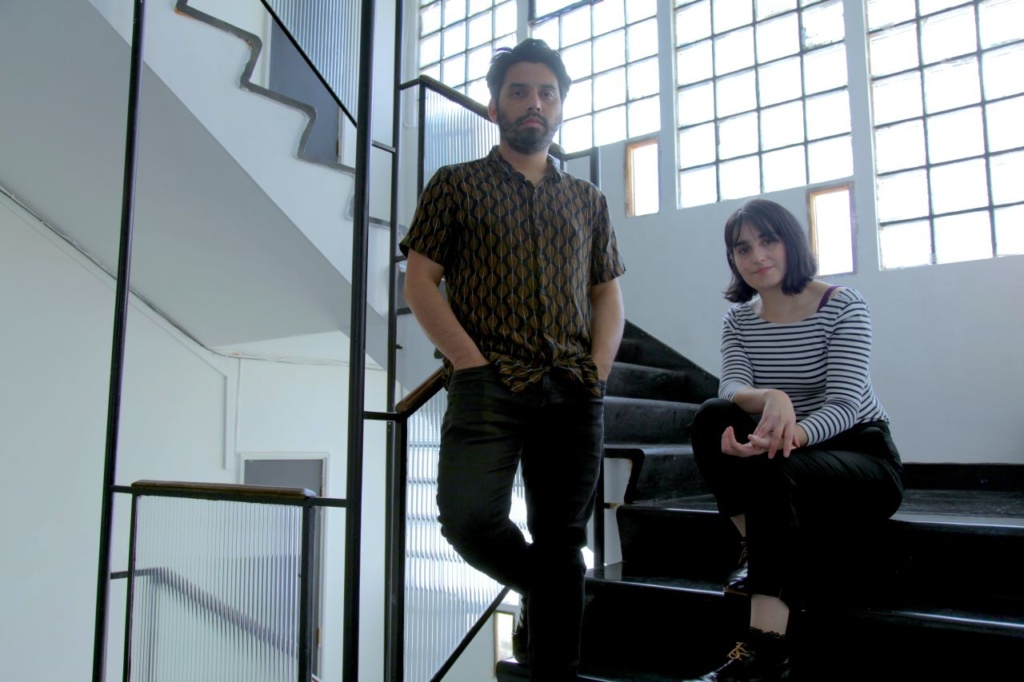
Núcleo Creativo CC
A duo established in 2017 by Edison Cájas and Daniela Contreras-López to explore, along with other artists and contributors, scenic devices by mixing cinema and theatre resources with audience participation. Their artistic work combines interdisciplinary research to explore the Chilean dictatorship (1973–90) and its effects on the current society, crossing stories based on their personal lives with events occurred in Chile in recent years, as a way to bring a present reflection to the social sphere. Their method consists of conceiving the scenic pieces as a cinematographic assembly, in which the theatrical elements are developed according to the mechanics of cinema.
Edison Cájas
A Chilean filmmaker, theater director, and graduate in Philosophy. He has directed six fiction short films and a feature documentary premiered at the Locarno Film Festival. His work focuses on Chile’s historical memory, exploring the connections between trauma, truth, and representation. As a filmmaker, he has directed and coordinated several audiovisual memory archives dedicated to survivors of extermination camps and torture centers in Chile, including the Villa Grimaldi Oral Archive, Colonia Dignidad, and the Borgoño Archive. His work seeks to confront violence and disappearance through an ethics of image and memory.
Daniela Contreras-López
A Chilean performing artist whose work spans directing and acting, both in film and theatre. Her practice stems from a drive to explore memory, human rights and the traces of dictatorship in present-day Chile, articulating theatrical and cinematographic languages in hybrid and collaborative devices.
Baviera presentation
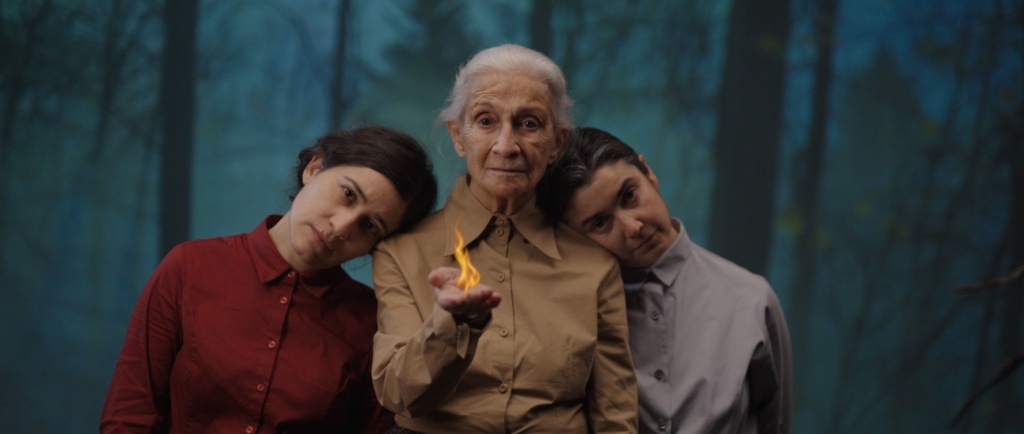
On 7 November 2025, at 9:45 am, a video theatre performance by the Núcleo Creativo CC titled Baviera (2021, 41’) was presented in the Theatre Studio with an introduction by Prof. Ziółkowski.
Baviera explores the concept of evil associated with the system of repression and punishment established in Colonia Dignidad. It is a stage play that combines theatre and cinema to reflect on this system.
Synopsis: A girl is treated at the Colonia Dignidad hospital, a compound in southern Chile led by Paul Schäfer, and begins to be held captive to continue treatments that cure illnesses she no longer has. The drugs she is given keep her in a permanent state of hallucination and chaos. The girl is forced to learn German and is illegally adopted by a German family. Lost in a maze of unanswered questions, she tries to reconstruct her reality.
Funding
The artists’ visit to AMU, Poznań was funded by the Chilean Ministry of Cultures, the Arts and Heritage (Ministerio de las Culturas, las Artes y el Patrimonio de Chile, MINCAP). Project funded by the National Fund for the Promotion and Development of the Performing Arts (Proyecto Financiado por el Fondo Nacional de Fomento y Desarrollo de las Artes Escénicas), 2025.